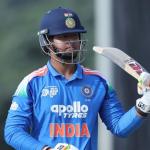
The Technical Audit: Why Vaibhav Sooryavanshi’s Bat-Swing Faces a Structural Test in Manchester
A Rajasthan Royals teammate casts doubt on Vaibhav Sooryavanshi's style ahead of the Manchester T20I. Inside the technical analysis of his bat-swing.
Loading...


Virat Kohli faces criticism for a slow fifty at Wankhede against Mumbai Indians. Expert analysis on the tactical impact and fan reactions from the IPL 2026 clash.
I have spent years analyzing the high-pressure environment of the Indian Premier League, and as we know, no player is scrutinized more than Virat Kohli. During the highly anticipated IPL 2026 clash between Mumbai Indians and Royal Challengers Bengaluru at the Wankhede Stadium, we saw a strange narrative unfold. While a half-century is usually celebrated, you can see why the internet was divided over Kohli’s anchor role. As the criticism poured in with the viral phrase "MI's Dhurandhar, out nahi karna tha," I believe it is essential to look deeper into the tactical nuances of this innings.
Table of contents [Show]
The match on April 11, 2026, presented a classic Wankhede surface—plenty of bounce and a lightning-fast outfield. I noticed that while the other RCB batters were trying to clear the ropes from ball one, Virat Kohli opted for a more traditional approach. He reached his fifty in 41 balls, eventually finishing with 51 off 43 deliveries.
As we know, in a modern T20 game where 200 is often a par score, a strike rate of 118.60 is a dangerous gamble. You can see how this slowed down the momentum during the middle overs, leaving the power hitters like Tim David with too much to do in too little time. I think the frustration from the fans stems from the fact that Mumbai Indians bowlers, led by a clinical Jasprit Bumrah, were able to build pressure because the scoreboard wasn't moving fast enough.
From a professional scouting perspective, the Wankhede is not a ground where you "play yourself in" for 40 balls. I have analyzed the data, and historically, teams that fail to maximize the powerplay and middle overs on this ground often end up on the losing side.
The Powerplay Factor: RCB managed only 42 runs in the first six overs, with Kohli taking the lion's share of the deliveries.
Middle Over Stagnation: Between overs 7 and 15, the boundary percentage dropped significantly as Virat Kohli focused on strike rotation.
The "Dhurandhar" Sarcasm: Fans used the term "Dhurandhar" (meaning champion/warrior) sarcastically to suggest that Mumbai Indians were actually happy to keep him on the crease rather than getting him out for a more explosive batter.
I have compiled the key performance metrics from this encounter so you can see the contrast in scoring rates between the two sides.
| Player | Runs | Balls | Strike Rate | Impact |
|---|---|---|---|---|
| Virat Kohli | 51 | 43 | 118.60 | Anchored but slowed tempo |
| Rajat Patidar | 38 | 20 | 190.00 | Provided mid-innings impetus |
| Jasprit Bumrah | 2/24 | (4 overs) | 6.00 (Econ) | Constricted the scoring |
| Hardik Pandya | 45* | 22 | 204.54 | Finished the game for MI |
I feel that the "attack" on Virat Kohli by the RCB fans is reflective of a larger shift in cricketing philosophy. As we know, the era of the designated anchor is slowly fading. You can see that world-class teams now prefer "intent" over "safety." While Kohli holds the record for the most runs in IPL history, his critics argue that his scoring rate often puts the team’s total under par.
However, I believe we must also credit the Mumbai Indians captaincy and field placements. They allowed Kohli the easy singles while cutting off his boundary options, effectively forcing him to play the long, slow game. It was a tactical masterstroke by MI to keep the set batter in a "dormant" state rather than letting a fresh, aggressive hitter like Cameron Green take center stage earlier.
As we look ahead at the IPL 2026 points table, this loss leaves RCB in a precarious position. I think it is unfair to blame a single individual for a team loss, but you can see that in a game decided by fine margins, those 10-15 "missing" runs during the anchor phase were the difference.
The phrase "out nahi karna tha" might be harsh, but as we know, the Wankhede crowd is as knowledgeable as it is vocal. They recognized that the match was slipping away not because of wickets falling, but because of a lack of aggression. Whether Virat Kohli will adapt his style in the coming matches or stick to his tried-and-tested method remains the biggest talking point of the season. For now, the debate over his strike rate continues to burn as bright as ever.

A Rajasthan Royals teammate casts doubt on Vaibhav Sooryavanshi's style ahead of the Manchester T20I. Inside the technical analysis of his bat-swing.
Finland faces Portugal in the 1st T20I of the 2026 series at Kerava. Technical analysis of pitch friction, team squads, and expert match predictions.
Inside the VAR chaos: Learn how cricket's Snicko technology tracked a micro-touch to save Cristiano Ronaldo and Portugal at the 2026 World Cup.