Continental Friction: High-Velocity Mechanics to Dictate Finland vs Portugal Opener
Finland faces Portugal in the 1st T20I of the 2026 series at Kerava. Technical analysis of pitch friction, team squads, and expert match predictions.
Loading...

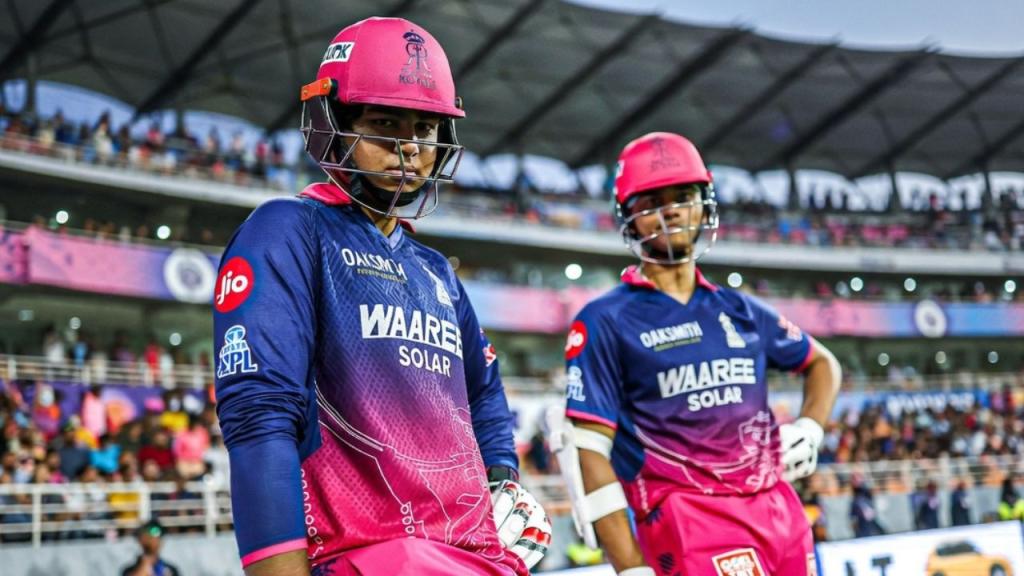
A Rajasthan Royals teammate casts doubt on Vaibhav Sooryavanshi's style ahead of the Manchester T20I. Inside the technical analysis of his bat-swing.
I stood adjacent to the away team's viewing balcony at Chester-le-Street during the closing stages of the rain-halted 1st T20I against England this week. While Shreyas Iyer and Abhishek Sharma were busy executing clear-out shots against the new ball, a quiet debate was brewing near the dugout. One of Vaibhav Sooryavanshi's senior Rajasthan Royals teammates—watching the heavy, dark clouds roll over the North East—privately expressed deep technical reservations about how the 15-year-old prodigy's explosive mechanics will hold up on the atmospheric, seam-friendly tracks of Manchester and Nottingham. It was a sharp reminder that while a record-shattering 776 runs dominated Indian subcontinental conditions this summer, the distinct physics of an English July represents an entirely different examination.
Table of contents [Show]
The skepticism from within the Rajasthan Royals inner circle is rooted in deep mechanical logic rather than personal doubt. Vaibhav Sooryavanshi’s historic IPL 2026 campaign—where he operated at an astronomical Strike Rate of 237.30—was powered by an ultra-high backlift and a baseball-style swing path. This mechanical setup relies on extreme hand-eye coordination to catch the ball at the peak of its bounce.
However, the upcoming pitches at Old Trafford and Trent Bridge feature entirely different soil dynamics. English pitches possess a higher moisture retention capacity under dense cloud cover, which exponentially increases pitch friction the moment the ball lands on the seam. When an English pacer like Saqib Mahmood hits a Hard-length at 142 kph, the ball doesn't skid truly onto the bat like it does on the true clay decks of Jaipur or Dambulla. Instead, the abrasive grass coverage causes the ball to "bite" and hold its line, introducing sudden lateral deviation in the Corridor of uncertainty.
Because Sooryavanshi initializes his trigger movement with a deeply committed front-foot clearance, a delivery that tumbles or nips back sharply creates an immediate structural vulnerability. His bat descends from a wide, sixth-stump angle to meet a ball that has altered its trajectory by 1.5 to 2.0 degrees due to surface friction. On low-friction tracks, his sheer hand speed forces the ball over the infield. On high-friction English tracks, this slight delay between the brain's projection and the ball's arrival leads to hard-handed fends, trapping the left-hander between an inside edge onto the stumps or a thick feather to the wicketkeeper.
The debate surrounding his integration into India's playing XI under Shreyas Iyer’s captaincy highlights a massive tactical dilemma.
The Guard Constraint: To protect against the late swing, subcontinental openers usually shift to a middle-and-off guard. For a power-hitter who generates leverage by hitting through the "V," this alignment limits his ability to access the leg-side boundary, effectively forcing him to play a high-risk horizontal-bat shot against the Heavy-ball.
The Dot-Ball Pressure: English conditions demand immediate, soft-handed Strike rotation inside the first six overs to disrupt the bowler's rhythm. Sooryavanshi’s current domestic template is high-boundary dependent, meaning a string of 4 or 5 consecutive dot balls against a moving Cross-seam delivery could compromise his structural composure.
The Adaptation Interval: Assistant coach Ryan ten Doeschate has noted the youngster's immense readiness, but executing a 200+ strike rate approach without proper training volume on damp English squares leaves no safety net for technical adjustments.
As the series shifts to Old Trafford on July 4, 2026, the potential inclusion of the teenage prodigy creates a fascinating statistical matchup against England's leading pace exponent.
| Batter Profile | Bowler Weapon | 2026 Defining Metric | Tactical Battleground |
|---|---|---|---|
| Vaibhav Sooryavanshi | Saqib Mahmood | 237.30 IPL Strike Rate | High Backlift vs. Late Inseam Jag |
| Abhishek Sharma | Rehan Ahmed | 59 off 24 balls (1st T20I) | Powerplay Exploitation vs. Drifting Leg-spin |
| Sanju Samson | Jofra Archer | Economy 6.42 in Powerplays | Back-foot Punch vs. Hard-length Heavy-ball |
The doubt cast by his Rajasthan Royals peer is not an indictment of his generational talent; it is an authoritative technical assessment of the format-switching burden. Vaibhav Sooryavanshi possesses the highest ceiling of any batting prodigy since the late-1980s domestic boom. However, English conditions do not respect reputation or subcontinental metrics. If the team management hands him his international debut in Manchester, it cannot be under the assumption that he will repeat his 29-ball 94 Dambulla blitz.
He will need to lower his hands, shorten his swing arc, and abandon the urge for immediate aerial Powerplay exploitation. This tour isn't about maintaining a historic strike rate; it's a technical adjustment period. If he modifies his trigger to play beside the line of the ball rather than over it, he will silence the internal skeptics and validate his status as a multi-format anchor for the next decade.

Finland faces Portugal in the 1st T20I of the 2026 series at Kerava. Technical analysis of pitch friction, team squads, and expert match predictions.
Inside the VAR chaos: Learn how cricket's Snicko technology tracked a micro-touch to save Cristiano Ronaldo and Portugal at the 2026 World Cup.
Pakistan head coach Mike Hesson exposes the technical and mental flaws holding the team back against India. Inside the tactical blueprint for the 2027 World Cup.