The Technical Audit: Why Vaibhav Sooryavanshi’s Bat-Swing Faces a Structural Test in Manchester
A Rajasthan Royals teammate casts doubt on Vaibhav Sooryavanshi's style ahead of the Manchester T20I. Inside the technical analysis of his bat-swing.
Loading...

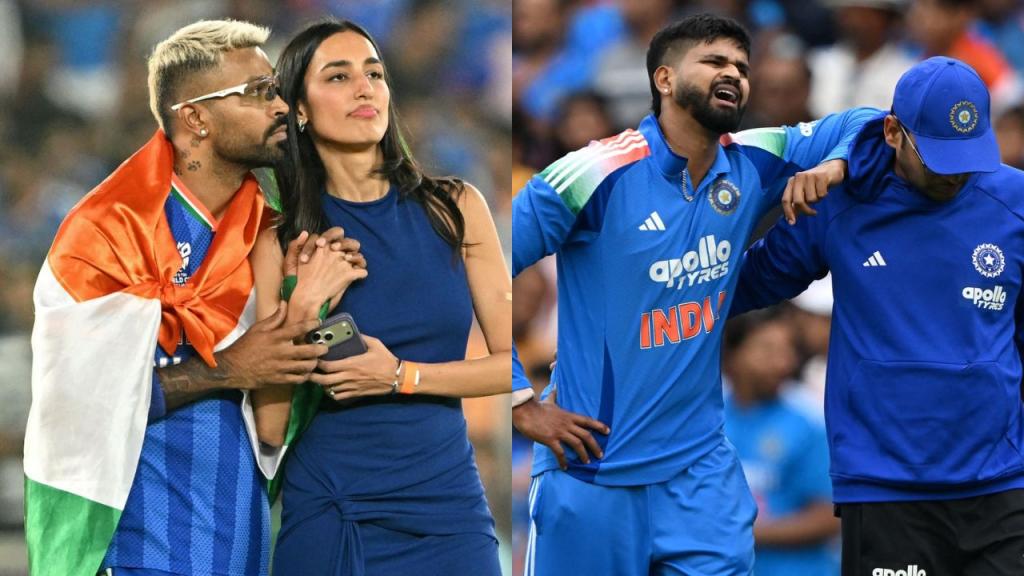
Ravi Shastri bypasses Hardik Pandya and Shreyas Iyer to support Sanju Samson as India's future T20 captain. A tactical and technical breakdown of the 2026 decision
I sat on the walkway of the pavilion in the pavilion corridor at the HPCA Stadium in Dharamshala the other night and listened to the echoes sound of the ball beneath the light as the following season of Indian cricket was beginning to take form. The local press was focused at Jasprit Bumrah's unexpected captaincy debut with the Mumbai Indians because of Hardik Pandya's frequent back spasms an even larger tactical tectonic shift was happening at the back of the scene. The former India director of coaching Ravi Shantri, who is widely accepted as Virat Kohli's top strategic ally during India's fierce red-and-white-ball revival -- has changed the conversation about national leadership. As a final declaration, Shastri bypassed traditional frontrunners Shreyas Iyer and Hardik Pandya to back Sanju Samson as the ultimate replacement of Suryakumar Yadav for the road until 2028's Los Angeles Olympics.
Table of contents [Show]
The reasoning behind excluding Hardik Pandya out of future T20I captaincy plans stems from the science of sports and the mechanical management of load. Hardik Pandya's bowling style requires extreme exaggeration of the spine's lumbar region at the moment where he releases. In the 2026 edition of IPL this physical strain has caused chronic back spasms that have kept the bowler's ability to take the mere four wickets during the tournament. In the modern age of a T20 captain, the inability to ensure a complete quota of innings on smooth or slippery tracks is a major blow to an entire team's stability.
In contrast, Shreyas Iyer's absence is due to a technical issue with the national selection frameworks, as well as top-order power-play exploits. In spite of Iyer's impressive tactical success -- with an all-time high IPL captaincy winning/loss percentage in the range of 1.420 across three different franchises, his tense relationship with central contracts impedes his ability to continue.
Sanju Samson, but, has a completely distinct physical and technical look. As a wicketkeeper-batter Samson's position utilizes the lower weight of his body that is free of trigger movement. This efficiency in mechanics lets him maintain a dazzling striking rate of 199.37 against fast-paced enforcers that hit the hard-length. As the ball approaches into the corridor of uncertainty, Samson relies on a powerful wrist snap instead of excessive lunges. It allows him to exploit the field's limitations from ball one, without requiring the warm-up period which is something which each of the Hardik as well as Shreyas are currently lacking due to their own restructuring of their structures.
Indian cricket's white ball blueprint went through an enormous transformation after the Indian team's home T20 World Cup triumph in March 2026. Due to Suryakumar Yadav's current dip in his individual batsmanship during the current national season, the selectors are looking for longer-term insurance plans.
The Powerplay Vacuum The modern T20I requires a ferocious captain who is a leader for the first six balls. Shreyas Iyer likes to play an anchoring role and Samson prefers an anchoring role. Samson is able to score boundary runs at a rate of 3.4 balls during the Powerplay.
The availability factor Hardik Pandya's long-running injury record means India can't build a solid 24 month leadership cycle around his.
The Big Game Engine: Shastri's endorsement of Samson is heavily dependent on the goalkeeper's Player of the Tournament record at the World Cup, where he scored 321 runs with an average 80.25 when knockout games were crucial.
The race for the next Indian captaincy will be a direct battle between strategic accumulation and high-impact destruction.
| Candidate | IPL 2026 Batting Average | 2026 Season Strike Rate | Core Tactical Limitation |
|---|---|---|---|
| Sanju Samson | 53.00 | 169.29 | Historic Mid-Tournament Consistency Dips |
| Shreyas Iyer | 44.15 | 175.07 | Susceptibility to High-Pace Heavy-ball |
| Hardik Pandya | 22.40 | 134.12 | Lumbar Spasms & Restricted Bowling Load |
It's not a shift in preferences this is a technological as well as philosophical change in how India will play in the most compact format. Ravi Shastri's support for Sanju Samson signifies that the national team has stopped waiting around for anchors with multi-formats that can adapt to run-chase 200+ conditions. Hardik Pandya's physical limitations as well as Shreyas Iyer's contract hurdles have put them out of the main race. With the IPL 2026 playoffs get closer, Sanju Samson isn't merely auditioning for national silverware anymore. He is active in acquiring the key for the Indian T20I future.

A Rajasthan Royals teammate casts doubt on Vaibhav Sooryavanshi's style ahead of the Manchester T20I. Inside the technical analysis of his bat-swing.
Finland faces Portugal in the 1st T20I of the 2026 series at Kerava. Technical analysis of pitch friction, team squads, and expert match predictions.
Inside the VAR chaos: Learn how cricket's Snicko technology tracked a micro-touch to save Cristiano Ronaldo and Portugal at the 2026 World Cup.